For professionals
Buying secondhand vases for a floral business: a sourcing checklist
Evaluate used vases and floral vessels by working dimensions, water containment, matching quantity, prep time, and fit with your floral mechanics.
By Dearly Found Editorial · 4 min read
1. Source for an arrangement you can describe
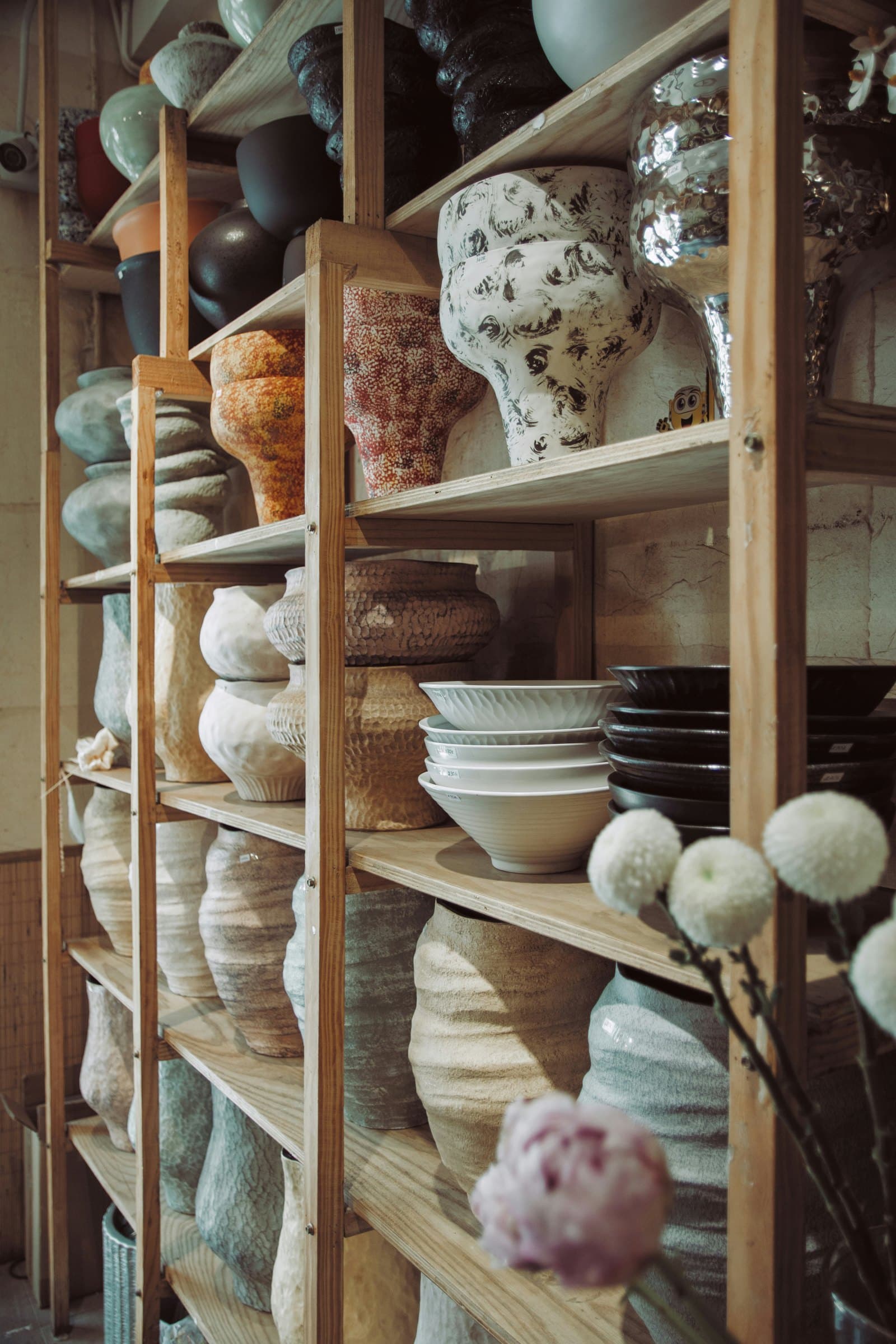
Define the working requirements before searching: footprint, height, opening, interior depth, finish, and quantity needed together. An attractive vessel is not automatically useful for the designs you sell. Identify which dimensions are essential and which can vary within the intended look.
Include transport and storage in that brief. A wide bowl may suit the design but need a different crate from your existing stock. A tall vessel might require additional handling that your current event team has not planned for. Ask who will pack, move, and retrieve the finished arrangement.
2. Ask for measurements that affect the mechanics
Request opening width, interior depth where measurable, overall height, and base dimensions. For a pedestal vessel, ask for photos of the stem, foot, and bowl connection. Confirm the actual material; a metallic finish does not establish solid metal construction.
If you use removable liners or other reusable mechanics, confirm they fit rather than assuming compatibility from the exterior shape. Ask what is included and whether liners, inserts, or lids are missing. Include those replacement parts in the comparison with a complete alternative.
3. Verify water containment before production
Do not infer that every object sold as a vase can hold water directly. Accent Decor, for example, identifies its Mirabel Vase set as not watertight. Check the specific item’s manufacturer information when available and ask the seller about its actual use.
For pieces you acquire, inspect and trial the intended liner and arrangement setup in a controlled workspace before an event. Follow care guidance for the material. Check for leakage or changes during the intended use period rather than relying on a quick fill. If you cannot verify suitability, keep the vessel out of a confirmed water-bearing design.
4. Count a serviceable batch, not a photographed collection
Ask whether every piece is the same model, finish, and dimensions. Request a full-group photo and details of chips, cracks, repairs, residue, or finish wear. One clean sample does not establish that all 30 pieces are event-ready. Separate acceptable visual variation from damage that makes a piece unsuitable for use.
Plan how many matching pieces you actually need concurrently. A mixed lot may be useful for an intentionally varied design, but do not count it as a matched collection without checking. Keep any trial or rejected pieces out of the stock available to your quoting team.
5. Work out the landed, usable unit cost
Suppose a lot costs $180, collection costs $30, and replacement liners plus preparation cost $30. The total is $240. If 24 pieces meet your requirements, the illustrative ready-to-use cost is $10 each. If only 20 pass inspection, it is $12 each. These are sample inputs, not a market price or a guarantee of margin.
Include the preparation time your business actually spends, using your own costing method. Compare that result with an equivalent complete vessel, not just with the used lot’s headline price. Consider whether replenishment matters for a collection you expect to offer repeatedly.
6. Decide who owns the vessels after the event
Record whether a vessel stays in your inventory or transfers to the client under the agreed arrangement. Communicate that plan to the pickup team and anyone inviting guests to take flowers home. Use an outgoing and return count for business-owned vessels so the next event is not planned around missing stock.
For surplus you own, preserve the model, dimensions, usable quantity, and condition notes. Those details make a useful Dearly Found listing when your design direction changes. Never offer vessels still committed to a booking or owned by a client.
- Opening, depth, footprint, height, material, and finish
- Water containment and fit with your intended liners or mechanics
- Usable quantity after inspection and a representative trial
- Collection, prep, missing-part costs, and storage requirements
- Ownership, event return count, and future availability
Frequently asked questions
- Can any decorative vase hold fresh flowers in water?
- Do not assume so. Check the specific vessel’s information and whether a liner is required. Trial the intended setup before relying on it for an event.
- What measurements should florists request when buying used vessels?
- Request overall height, opening width, interior depth where measurable, and base dimensions. Check compatibility with your intended liner, mechanics, transport containers, and design.
- How do I compare a bulk used vase lot with new stock?
- Divide the full acquisition and preparation cost by the number of pieces that meet your requirements. Include collection, missing components, and prep, then compare equivalent ready-to-use pieces.
Written by Dearly Found Editorial
Practical guides to giving wedding and event pieces their next celebration, from the team building Dearly Found, a marketplace for new and gently used wedding and event decor.
Questions or a correction? Contact us